At this time of the year, students are preparing for exams. In the UK, teenagers are preparing for GCSEs, A levels, and university entry. If you have a teenager and are worried about exam stress affecting their sleep, mood, behaviour, and confidence, I understand your concern.
Parents play a valuable role in helping their teenager through exam stress.

How Common Is Exam Stress in Teenagers?
Teenager exam stress is common worldwide.
Many parents worry about their teenagers, no matter their background or culture. That’s normal.
Is exam stress amongst teenagers increasing?
Yes. There is evidence from several studies that teenage exam stress is on the rise for several reasons.
- Social pressures from social media and society to do well.
- Standardised testing.
- Parental pressure to achieve more in academia.
- Academic qualifications are seen as more important than other skills.
- Inequality.
- Technology, including AI.
- The changing world with conflict and social stress.
Signs Your Teen May Be Struggling With Exam Stress
As a parent, you may have noticed changes in mood, behaviour and attitudes to all sorts of things, not just exams.
Well, some of that may be due to hormones and the changes related to adolescence, but when it becomes a problem during exam time, as a parent, you want to do something.
Physical signs include:
- Tiredness.
- Headaches.
- Tummy aches.
- Difficulty sleeping.
- Changes in eating.
Emotional signs include:
- Moodiness.
- Stress and anxiety.
- Negative self-talk. Fears of failing and other fears.
- Lack of motivation.
- Tearfulness.
- Low confidence and self-esteem.
Behavioural signs include:
- Procrastination.
- Avoidance.
- Withdrawing from usual hobbies and activities.
- Stopping hobbies or sports.
What can I do to help?
- Stop focusing too much on exam results. Everyone wants children to do well in their exams, but too much pressure from parents and the school can be overwhelming. Your child knows that you want them to do well, but there will be subjects that they hate or struggle with. As we approach the exams, they need to focus on what they can do rather than what they can’t. Reframe failure.
Focusing too much on studying and getting good results can trigger stress and anxiety. So talk about other things, such as their favourite sport. Be supportive, not authoritarian.
Celebrate effort.
- Help them stick to a plan. This might be a regular time to study and another to rest. They should have a revision plan from their school, so you will know what they are studying.
- Remember the importance of them getting enough sleep, good nutrition and some exercise. Restrict snacking and encourage having meals with the family.
- Don’t compare your child to others who study more or get better results. People learn and are motivated to study in different ways. Furthermore, maybe your child is more practical than academic.
- Get them support if you feel that communication is a struggle and they need practical help.
Places to get help include;
- Talk to your doctor if you think your child’s health is suffering.
- Contact their school or college. Let them know that your child needs support.
- Get help and advice from charitable organisations such as YoungMinds or Mind.
- Contact a counsellor or hypnotherapist.
Help at Awaken the Change
In addition to this blog and signposting to resources, I offer hypnotherapy for exam stress and counselling. I’m based in Bournemouth, but I also offer online support via Zoom.
Counselling can be helpful for your teenager and for parents during this stressful time.
Hypnotherapy can help relax tense muscles, enhance motivation, reduce exam-related fears, and highlight the positive aspects of looking to the future.
Book a complimentary 30-minute consultation to find out more at www.awakenthechange.com/online-bookings
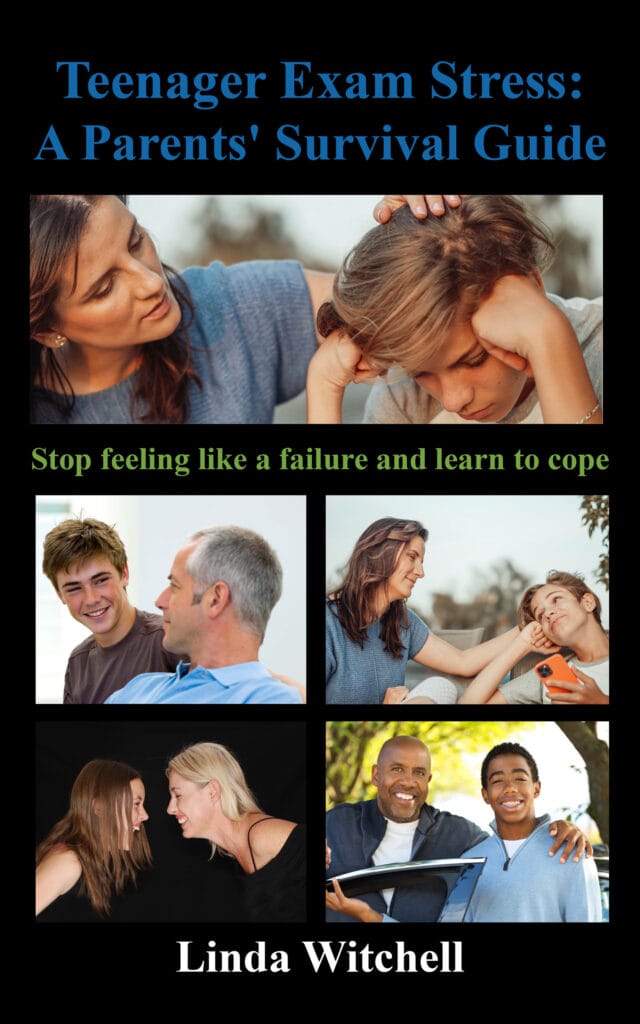
And I have written a book called ‘Teenager Exam Stress. A Parent’s Survival Guide, which you will find full of many more aspects of exam stress. This is available on Amazon and through my website www.awakenthechange.com