
Stress is everywhere. Ever wondered why you can’t switch off? Do you ever feel mentally exhausted but still unable to relax?
You finally sit down at the end of the day, yet your mind keeps going. You replay conversations, think about tomorrow’s tasks, worry about work, family, health, money, or things you should have done differently.
Many people describe feeling physically tired but mentally “wired”. That’s one of the signs of increasing demands resulting in stress.
If this sounds familiar, you are not alone.
Hi, I’m Linda, a hypnotherapist, counsellor and coach. I find that many of my clients explain these thoughts and feelings to me.
I’ve noticed over the years that modern life keeps many people in a constant state of mental overload. Your nervous system was not designed to cope with pressure, stimulation, and uncertainty all day long without rest and recovery.
It’s an overload, like a bucket overfilling with water, but with stress, it’s demands and pressures.
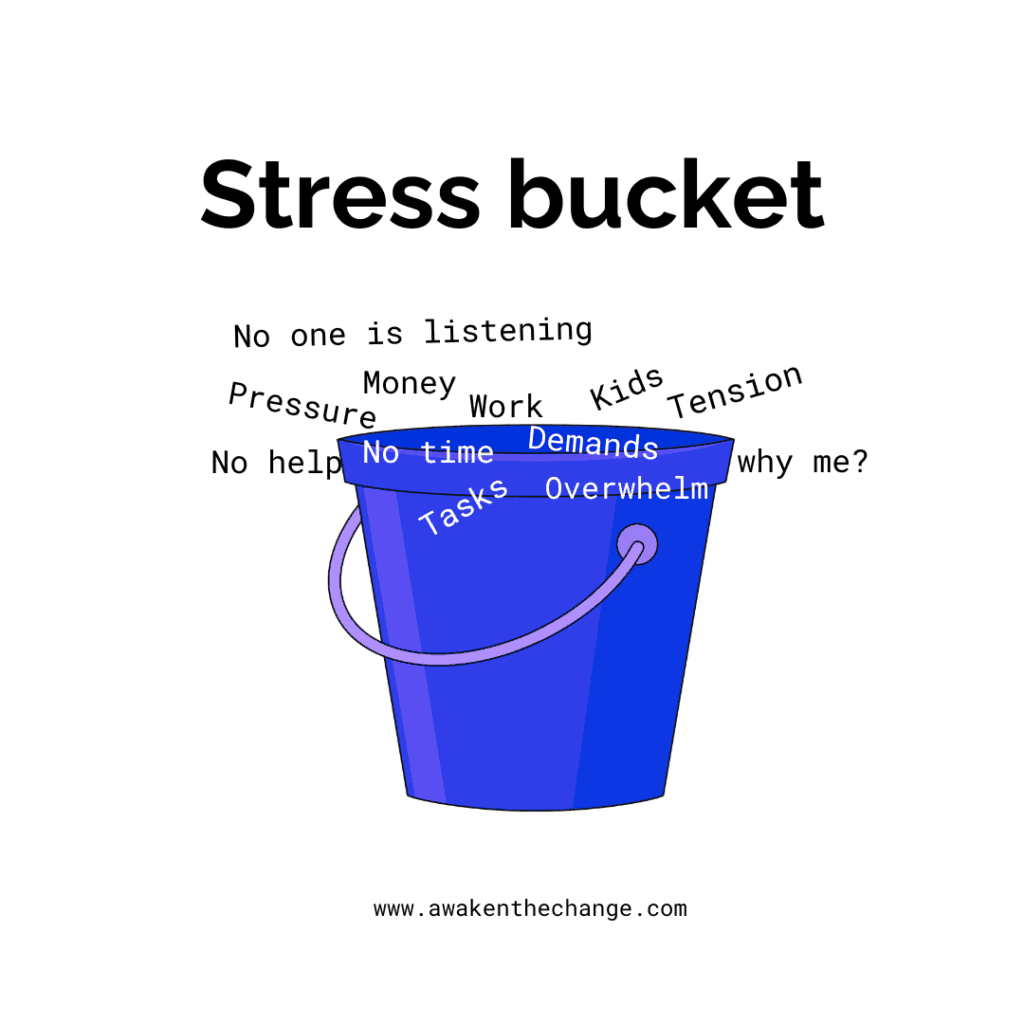
Here are five common reasons why your mind may never seem to switch off.
1. Your brain thinks that it is protecting you
Did you know that our brains are designed to scan for danger? It’s about survival.
Years ago, this helped humans survive physical threats. Today, the brain often reacts similarly to emotional stress, deadlines, financial pressure, conflict, uncertainty, or social anxiety.
When stress hormones such as cortisol and adrenaline remain elevated for long periods, your nervous system can stay stuck in “high alert” mode. This makes it difficult to relax properly.
Stress affects all parts of the body.
You may notice:
- Racing thoughts
- Restlessness
- Overthinking
- Difficulty sleeping
- Feeling constantly tense
Your brain is trying to protect you, even when the threat is not physical.
2. You have become used to stress
Some people become so accustomed to stress that it starts feeling normal.
You wake up and immediately check your phone. You rush through the day multitasking. You rarely pause. Even during quiet moments, your mind searches for the next problem to solve.
Over time, the nervous system can become conditioned to stay alert.
This is one reason why some people struggle to relax on holiday or feel guilty when resting. Slowing down may feel uncomfortable because the brain has adapted to constant stimulation.
3. You carry emotional overload
Unprocessed emotions often keep the mind busy.
Stress, grief, anxiety, pressure, disappointment, resentment, or self-doubt do not simply disappear because you ignore them. They often continue running quietly in the background.
Many people try to stay strong by pushing emotions aside while continuing to function normally.
Eventually, the mind demands attention.
This emotional overload may appear as:
- Irritability
- Anxiety
- Poor sleep
- Feeling overwhelmed
- Emotional numbness
- Tearfulness
- Difficulty concentrating
Talking through problems, learning coping strategies, and reducing emotional pressure can significantly calm the nervous system.
4. Technology keeps your brain switched on
Modern technology gives the brain very little downtime.
Many adults spend hours checking emails, scrolling social media, watching short videos, or responding to notifications. The brain receives constant stimulation throughout the day and often late into the evening.
Research suggests excessive screen time and digital overload may negatively affect sleep, attention, stress levels, and mental well-being.
Your brain needs recovery time away from constant input.
Simple changes such as reducing screen use before bed, taking breaks, or spending time outdoors can make a noticeable difference.
5. You rarely truly relax
Many people stop activity without genuinely relaxing.
There is a difference.
You can sit on the sofa while your mind continues racing internally. True relaxation involves calming both the body and the nervous system.
This is where approaches such as:
- Hypnotherapy
- Mindfulness
- Breathing exercises
- Counselling
- Guided relaxation
- Gentle exercise
- Meditation
- Better sleep habits
can become extremely valuable.
Relaxation is a skill that can be relearned.
There is good news!
The brain can change.
Research into neuroplasticity shows that the brain can adapt and form healthier patterns throughout life.
With the right support and consistent practice, many people learn how to feel calmer, sleep better, reduce anxiety, and regain a sense of control.
You do not need to wait until you reach burnout before making changes.
At Awaken the Change, I provide professional hypnotherapy, counselling, and coaching online for adults experiencing stress, anxiety, overwhelm, grief, and confidence difficulties. For some people its a short course of hypnotherapy. For others, it’s a regular check-in with counselling, or it may be a guided meditation or a one-off relaxation session.
My approach is calm, supportive, and evidence-based, helping you understand the mind-body connection behind stress and anxiety.
Finally…
Your mind was never designed to stay switched on every minute of the day.
Sometimes the strongest thing you can do is pause long enough to recognise that your nervous system needs care too.
Small changes can create powerful results over time.
You don’t need to suffer from stress every day.
Hypnotherapy and counselling can help.
Book a free initial consultation and find out how I can help you reduce your stress and feel so much better.
Find out more through my website www.awakenthechange.com