Did you know that there are many ways counselling is provided for clients? If you’re experiencing a problem and considering working with a counsellor, but you’re unsure where to start, I’d be happy to help you decide what to do by answering your questions.

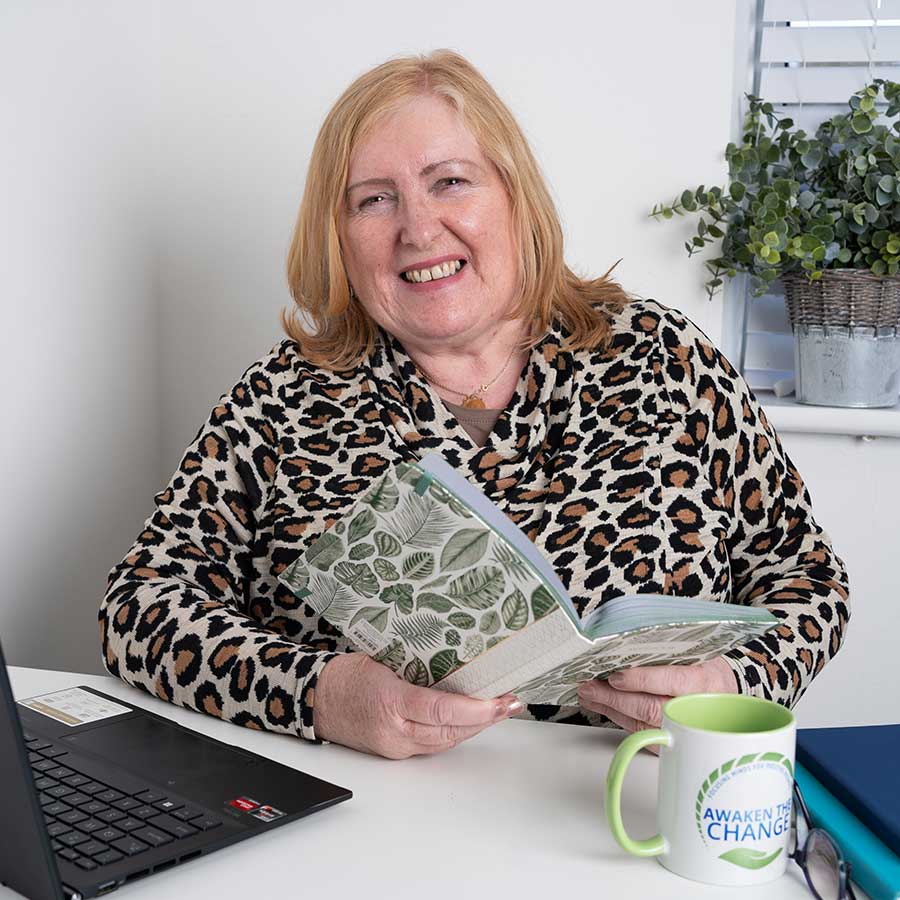
Hi, I’m Linda from Awaken the Change. I trained as an integrative counsellor/ puralistic counsellor. I also have a master’s degree in psychology. I specialise in Cognitive Behaviour (CBT). However, I believe that telling you about my qualifications first is one of the problems many people have when looking for a counsellor, as counsellors often share their approach with potential clients.
Today, I’ll unpack this and more to help you make informed decisions about seeking counselling, because I know that you want fast solutions, someone that you can trust and someone who can meet your needs.
Here are ten commonly asked questions.
1. What is counselling?
Counselling is a talking therapy that helps you to understand problems and make changes.
It’s communicating effectively with another human being.
Counselling as we know it today originated in the 1890s from the psychotherapist Sigmund Freud. Freud developed the first approach to counselling, which is called psychoanalytical counselling.
Counselling is non-judgmental and can cover almost anything that someone has a problem with, although not all counsellors help people with all issues in all niches.
Counselling does not tell you what you need to do to sort out a problem. Instead, a counsellor helps you express your emotions, understand your thoughts and beliefs, and guide you on how to deal with the situation. (There are often more ways to deal with a problem, but you just haven’t thought about it yet!)
Types of counselling
Counsellors are trained with different approaches.
Some counsellors obtain university qualifications, while others pursue a more vocational route to qualification. Most counsellors have some form of diploma in counselling, but it is also possible to get a degree, a master’s or PHD in counselling. As this is a talking therapy, most people do not want to get a PHD in counselling unless they wish to teach or explore a specific area.
The most common counselling approaches are:
- Psychoanalytical counselling. This is a longer form of counselling where the client is allowed to freely express and become aware of what they are thinking. This counselling is based on the preconscious and unconscious developmental states. It can take months or years.
- Cognitive Behavioural Therapy (CBT). This approach focuses on the connections between thinking, feeling and behaviours. This approach is often used within the National Health Service (NHS).
- Psychodynamic counselling. This approach focuses more on the past.
- Dialectical Behavioural Therapy (DBT). This approach modifies CBT and is used for people with long-standing problems. It helps to teach people to be in the ‘here and now’ and learn coping strategies.
- Solution Focused Counselling. This approach encourages solutions, although for some problems, there isn’t a solution; instead, it’s an acceptance of a problem and learning how to cope.
- Person Centred Counselling. This approach is often considered the foundation of all counselling because there are core skills used by the counsellor to help people.
- Gestalt counselling. This humanistic approach utilises creativity and people’s life experiences to help clients make positive changes. It involves a lot of self-awareness.
- Transactional Analysis counselling (TA). This approach considers roles or ego states in life. For example, are you acting as a parent, adult or child, or are people around you behaving in that way? Eric Berne, the founder of TA, calls it the games people play. He has also written a book with this name.
The delivery of counselling
Many people don’t realise that counselling can be delivered in many different ways.
Online or remote delivery has undoubtedly increased since the COVID-19 pandemic.
Counselling can be delivered via email, chatbot, text, or even with Artificial Intelligence (AI).
However, the most common way of accessing counselling is in person with a counsellor. This can be in the counsellor’s office or online.
Some counselling is delivered in groups or online via videoconferencing, such as Zoom.
All delivery methods depend on your preferences and the availability of the service you want in the area where you live and work.
All counselling delivery methods have pros and cons. For example, finding an online counsellor can mean that you see an expert anywhere in the world at the price you want to pay. In contrast, in-person counselling requires you to have time and money for travel.
2. What is the difference between counselling, psychology, psychotherapy and psychiatry?
The following questions people ask me relate to different talking professions that overlap but are still distinct.
- A psychiatrist. Psychiatrists do listen to clients with problems, but they are primarily dealing with medical issues such as psychiatric disorders, including Bipolar Disorder, Schizophrenia, and severe depression. Psychiatrists are trained as medical doctors.
- A psychologist. Psychologists are university-trained. Many have a PHD. There are different types of psychologists. For example, there are educational psychologists, sports psychologists, forensic psychologists, industry and business-based psychologists and clinical psychologists. There are also counselling psychologists, and they perform a counselling role. Psychologists often work in specialist services connected with health, teaching, education, or business. Some psychologists work privately.
- Psychotherapist. Depending on where you live and the different training and views of talking therapists, some people believe that psychotherapists have more detailed training than counsellors, so they deal with more complex cases. Other people think that counsellors can also have a high level of training and experience, so they can also deal with many complex problems. The titles of counsellor and psychotherapist are not protected titles, so people trained in talking therapy can call themselves whatever they want.
So the decision as to who you see depends on your problem. If it’s a health issue, you should always get a check by your doctor, and if a psychiatrist or clinical psychologist is needed, then your doctor can refer you to them.
You can self-refer to private counsellors and psychotherapists.
3. Is counselling confidential?
Counselling is considered a confidential service.
Counsellors will not discuss your case with anyone unless they have your permission to do so. They are also cautious with your notes and will lock all client notes away or password-protect them on a computer. Many counsellors will also code notes or take other steps to keep your information secure.
However there are times when confidentiality must be breached.
If you tell a counsellor something that they must report, they will report in a controlled way. For example, if you said that you were going to kill yourself or someone else today, then they would inform health services and, in some cases, the Police or Social Services.
If you told a counsellor something that involved the safeguarding of a child or vulnerable adult, then there is also a duty to inform.
If the counsellor were told of a serious crime such as terrorism, then that would also be reported.
If a court order were made against the counsellor, requiring them to provide information, they would be obliged to comply.
Finally, if the counsellor had any other severe concerns about their client’s health and wellbeing, then the counsellor may inform your doctor.
Counsellors tell you these things before starting counselling, and/ or they have them displayed on their website. They want to work in your best interests.
It is standard practice, in fact, it is required by professional bodies that counsellors have supervision. This means that they may discuss your case with a senior supervisor to check that they are on the right track and not missing anything, and to learn and provide a better service. Sometimes counsellors celebrate your successes with a supervisor.
All supervisors also respect confidentiality and so would not need to know the client’s name or identifying factors.
4. Is counselling about my past?
It depends on the counselling approach and the nature of the presenting problem as to whether the sessions will delve into the past.
All counselling will touch on the past because clients may talk about what they did last week, last month or what the problem started. Many deeper problems and beliefs come from childhood.
5. Do I need to answer lots of questions?

Again it depends on the problem and the approach.
Counselling psychologists and some counsellors may use lots of assessment forms.
Questions will be asked initially to understand the problem, but the time is for the client to talk, not the counsellor to question the client continuously.
6. How is counselling different from speaking with a friend?
A friend lacks training in effective communication. They may not listen and understand what is being said.
Friends who don’t adhere to boundaries may discuss your problems or give you wrong advice. They may also step over the boundaries and develop a sexual relationship.
Friends will not base their discussions on research and ways of working that have been shown to help.
Finally, why would you want to burden your friend with a problem that you can’t solve? They could also become depressed or anxious about you and the situation you are in.
7. What qualifications do counsellors have?
The qualifications of counsellors vary from country to country.
In the UK, in theory, counsellors don’t need any qualifications, but most counsellors have either vocational qualifications at level 4, 5 or 6 or academic qualifications such as a degree or master’s.
Counsellors also have insurance, and many belong to a professional body that requires them to have regular supervision and continuing professional development (CPD).
8. How long does each counselling session last?
Typically, 50 – 60 minutes for in-person or remote services with a counsellor.
There are online counselling courses that can take hours.
7. Will I need to attend weekly?
For some issues, one session might be all someone needs.
However, it is common for people to visit their counsellor weekly. This can be reduced over time.
9. How do I know which counsellor to choose?
Decide on the problem. If it’s health-related, see your doctor first. They may recommend counsellors or signpost you to other services.
When choosing a counsellor, choose someone qualified who specialises in the area where you need help.
Sometimes people recommend a counsellor. Although this may be a good idea, some counsellors won’t be the right fit for you and your problem, whereas they were for your friend or relative.
Look at methods of delivery. Is this all done online or in the counsellor’s office?
Look at reviews and read the information found on directories and their website. Consider the cost of the counselling and travelling if you are seeing them in their office.
Ask questions to understand who you are dealing with and how they operate.
Some counsellors will offer a free chat so you can ask questions before signing up for their services.
If you start with a counsellor and don’t like their approach, you can always change.
10. What specialist counselling is offered at Awaken the Change?
At the beginning of this blog, I highlighted the fact that the qualifications of a talking therapist could be confusing. A well-integrated or pluralistic counsellor has been trained in many different approaches to counselling. This is my way of counselling.
I first started learning how to counsel about 25 years ago and have continued to learn and help people with counselling since.
I always tell my clients that if they don’t feel comfortable in one way, then we can adjust our approach to meet their needs, rather than expecting them to work in a way that suits me.
I work primarily with adults and teenagers.
I work with clients for shorter times. I choose to take on clients who can be helped in weeks or sometimes months rather than many years. Six sessions are common.
I specialise in two areas. This includes helping people with bereavement and loss. This includes pet grief. (See my book called Managing Pet Grief on Amazon.)

Secondly, I also like to help people with stress and anxiety issues. These problems may also include a lack of confidence, work-related issues and much more.
Book a free initial consultation and find out more about how I might help you with counselling.
Imagine this.
You have found a counsellor with whom you have built a rapport quickly. You share your story and explain how this overwhelm is affecting you. You felt stuck, but now you are seeing a way forward. You realise that there are different ways to approach the problem. Your questions have been answere,d and you feel like a whole weight has been lifted off your shoulders. You can feel better, and you realise that you have the knowledge and skills to succeed. As an additional bonus, you feel good about yourself. No one will ever put you down and make you feel bad again. You now know your strengths and are working on areas where you need to learn and understand more. This could be you at counselling!